 SeaMemo
Docking a boat: Med mooring, alongside and leaving with a spring
Before you enter the harbour, rig fenders, at least four mooring lines and brief your crew. In the Mediterranean you usually moor stern-to on a lazy line: reverse into the gap, get the windward stern line ashore first, then lead the lazy line forward and make it fast at the bow. Where there are no lazy lines, your own anchor holds the bow. In tidal waters you often come alongside, ideally into the wind or current.
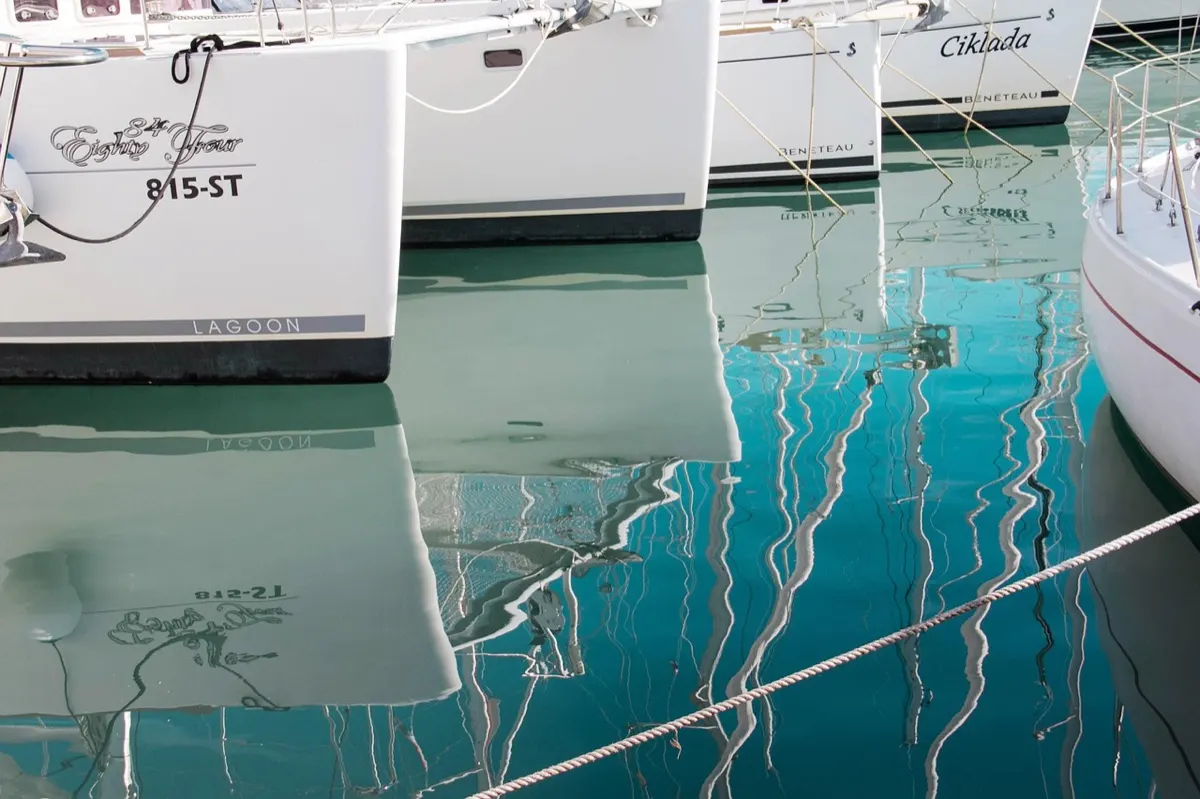
Before you enter: preparing to dock
When docking goes wrong, poor preparation is almost always the cause, says the harbour manoeuvre handbook of the Austrian sailing school Kempf. Sort these out before you turn into the fairway:
- Study the harbour: read the pilot book and plan, check depth, fairways and room to turn. Call the harbour master on the VHF or by phone. Often a marina hand will allocate a berth.
- Check the wind: where is it from, will it push you onto the quay or off it? How strong it is you can read in our guide to the Beaufort scale.
- Mooring lines: at least four, two forward and two aft, coiled in large loops. Lead them from the cleat out under the guardrail.
- Fenders: without piles, as is usual in the Mediterranean, hang them on both sides and at the stern before docking. In berths between piles put them out afterwards, otherwise they jam between hull and pile.
- Brief the crew: give everyone a job: port stern line, starboard stern line, lazy line, roving fender. Whoever handles the lazy line wears gloves, because it is often muddy and covered in sharp shells.
- Engine and anchor: start the engine in good time and test ahead and astern. Have the anchor ready to drop as a last resort in case the engine fails.
- Plan B: decide in advance what you will do if it does not work. Usually that means back out into the fairway and try again.
Mooring lines and what they do
| Line | Runs | Job |
|---|---|---|
| Bow line | from the bow forward to the shore | holds the bow to the quay |
| Stern line | from the stern aft to the shore | holds the stern, the two main lines when stern-to |
| Spring from the bow | from the foredeck diagonally aft to the shore | stops the boat moving forward |
| Spring from the stern | from the quarter diagonally forward to the shore | stops the boat moving astern |
| Lazy line | from the quay to a weight on the bottom, made fast at the bow | replaces the anchor in marinas |
Spring names vary: some sailors name them after where they leave the boat, others after the direction they run, so agree on the terms with your crew. The windward line is on the side the wind comes from. In a crosswind it takes the load, so it goes on first. You make lines fast with a cleat hitch: a round turn, figure of eight turns and a locking hitch. Our guide the 7 essential sailing knots shows how.

Med mooring stern-to with a lazy line in 6 steps
The lazy line runs from the quay to a heavy weight on the seabed. When nobody is using it, it hangs slack to the bottom. That is where the danger lies: get too close to your neighbours' lines and your rudder, keel or propeller can catch them.
- Go astern early. Get the boat moving astern well before the berth. Then she has steerage way, and if anything goes wrong you can simply motor ahead out of the fairway.
- Stay in the middle of the fairway. That keeps you clear of other boats' lazy lines. Just before turning into the gap, shift into neutral and let the remaining way carry you to the quay.
- Stop short of the quay. A short burst ahead keeps the stern clear. The crew at the stern shows the distance with hand signals instead of shouting.
- Windward stern line ashore. It goes on first. With a little way ahead you hold the boat off the quay while the line stays taut.
- Pick up the lazy line. A crew member hooks it with the boathook, takes in the slack at the stern and walks it forward hand over hand to the bow cleat. Do not haul the whole line aboard, or it can end up in the propeller.
- Second stern line and adjust. Get the leeward line ashore, then ease the stern lines a little and tighten the lazy line. A tight bow line keeps the stern off the quay.
In a crosswind keep only the windward line tight and the leeward one a little slack. That holds the boat in place until the lazy line is fast. To step ashore, put out the passerelle or a plank.
Stern-to with your own anchor
Many town quays have no lazy lines. Then your own anchor holds the bow. According to the Kempf handbook, though, you do not anchor in marinas that have lazy lines laid.
- Prepare: get the depth from the pilot book, work out the chain you need, and use more if in doubt. Flake the chain so it runs freely, fenders on both sides and a large one on the stern.
- Drop the anchor: the RYA suggests about four boat lengths from the quay. Then reverse towards the berth, paying out chain as fast as the boat moves. Take care not to cross other boats' chains.
- Set the anchor: about one boat length from the quay, stop paying out so the anchor bites.
- Stern lines ashore, chain tight: windward line first, then leeward. Then take up the chain and dig the anchor in until the stern lies safely clear of the quay.
How much chain you need for a given depth and how to check the anchor is holding is covered in our guide to anchoring a boat.
Prop walk: why the stern kicks sideways in reverse
The propeller does not only push the boat forward or back, it also moves the stern sideways. With a right handed propeller the stern walks to starboard going ahead and to port going astern, and the effect is much stronger astern. You can use it: with a right handed prop, coming alongside port side to, a burst astern to stop pulls the stern in towards the quay. Test which way your charter boat walks before you reach the harbour: put her briefly in reverse and watch where the stern goes.
Coming alongside
- Approach into the wind or current. Your speed relative to the quay is lower and you steer better. Often the bow line alone then stops the boat drifting off.
- Come in at a shallow angle. The Kempf handbook suggests about 30 degrees. Around 2 metres from the quay, steer gently away.
- Bow line ashore and stop. Engine astern until the boat stands still. The crew steps off only once the boat has stopped, at the shrouds and without jumping.
- Make fast. Bow line, stern line and both springs. Only then is the manoeuvre done.
If a boat is already on the quay, you can raft up alongside it. Ask the skipper first. A small fender hung on the seaward side signals that you are welcome to come alongside.
Between piles and on finger pontoons

In northern Europe many berths are boxes between piles. Put the fenders out only once you are in. A long midships spring led aft to the helm helps a small crew hold the boat while the other lines go over the piles. Whether you go in bow or stern first depends on wind and space. If you are not sure there is room to turn in the fairway, go in astern, then you can motor out ahead.
Leaving: lazy line first, then the stern lines
To leave a stern-to berth, put the stern lines on a slip, that is as a loop round the bollard and back aboard, so you can let them go from the boat. Start the engine and give a little ahead. Then drop the lazy line and wait until it has sunk well clear. Only then release the stern lines and motor out ahead, without passing over other boats' lazy lines.
When the wind pins you alongside, springing off helps:
- Against the spring from the bow: fender the bow well, put that spring on a slip, helm hard towards the quay and engage ahead, all other lines off. The bow presses against the quay and the stern swings out. Once the boat lies at 45 degrees or more, engage astern, let go the spring and back clear.
- Against the spring from the stern: the method of choice with the wind ahead. Fender the stern, spring on a slip, engage astern, other lines off. The bow swings away from the quay, then motor ahead and straighten the helm early.
In a crosswind, leaving reverses the docking order: release the leeward lines first and the windward lines last.
Once you are off the berth, the sailing starts. The two key manoeuvres under sail are explained in our guide to tacking and gybing.
Common docking mistakes
- Too fast. Go only as fast as you need to steer. Another lap beats a bump.
- Fending off with hands or feet. No part of your body goes between the boat and the quay or the next boat. Gelcoat can be repaired.
- Pushing off with the boathook. It is good for pulling in, risky for pushing off. And never hook it behind someone else's guardrail.
- Loose lines in the water. A line round the propeller leaves you without steerage. Never let lines or the lazy line trail aft while the engine is running.
- Shouting. Hand signals are calmer: each finger is one metre, a fist means stop.
- Taking someone else's berth. Only moor where yachts are meant to, and ask if a berth does not suit you. It may belong to someone who comes back later.
Plan docking with your crew in SeaMemo
Before entering port, a short list helps more than any command. In SeaMemo you set it up as a shared trip list that every crew member can edit and tick off. You can copy it from your own template and reuse it on every trip. What else to bring, such as sailing gloves for the lazy line, is in our sailing packing list.

Sources
- RYA: Med mooring stern-to: order of lines, mooring stern-to on your anchor
- Sailing school Martin Kempf: Hafenmanöver (PDF, German): lazy lines, anchor, alongside, springing off
- YACHT: 20 tips for docking and leaving (German): lines, fenders, hand signals, windward lines first
- Wikipedia: Propeller walk: direction of prop walk ahead and astern
Get SeaMemo for free
Logbook, travel journal and crew in one app. For iPhone and Android, works offline at sea.


Frequently asked questions
What is Med mooring?
Mooring with the stern (or bow) to the quay and the other end held by a lazy line or your own anchor. It is the usual way to berth in Croatia, Italy, Greece and Spain, where boats lie side by side with no finger pontoons.
Which line goes first when mooring stern-to?
Usually the windward stern line, then the lazy line, which is led to the bow and made fast, then the second stern line. That is the order the RYA recommends. Once secure, ease the stern lines and tighten the bow line so the stern stays off the quay.
Why does my boat swing sideways in reverse?
That is prop walk. With a right handed propeller the stern moves to port when going astern. Test which way your boat walks before entering the harbour and plan the manoeuvre around it.
How many mooring lines do I need?
At least four, two forward and two aft, says the German sailing magazine YACHT. Leaving on a spring needs one more long line.
What if the docking goes wrong?
Abort and try again. Do not let anyone rush you: go round once more or stop the boat until everything is ready. Hands and feet never go between the boat and the quay.